Wednesday, 31 August 2016

The World Of Memes

The World Of Memes
Memes are everywhere; they fill social networking sites with their humour and satire, and often people don’t need to know the context to be amused by them. Memes are quite a common feature on social networks, designed to bring people together for a mutual likeness and for a good laugh.

“Networks are two or more hubs linked by some kind of relationship with each other. Embedded in networks are notions of communication, exchange, community and self, reality and virtuality” (BA1001. 2016). Memes create a network within social media, a virtual network. Memes join everyone together at one point in time, through comments, likes, shares or posts. Everyone who sees it is joined to the others who have seen it. It creates a world wide network joining people who never knew another existed and allowing them to be aware of the world around them.

Self awareness comes into play with this world wide virtual social network; you can create your own posts, your own memes, and your own self. On social network you can be whomever you wish, and nobody can know or do anything about it. Its is a safe haven for those who have low self esteem and wish to be someone they are not; and thus hide behind the computer screen. It intertwines reality and virtual reality together, with the people communicating through the virtual network and altering their real self online to suit their wants.

“The digital era complicates definitions of the self and its boundaries, both dismantling and sustaining the humanist subject in practices of personal narrative, moving the “technologies of inscription” from the realm of the material world to the electronic “fundamentally alter[s] the relation of signified to signifier” (McNeill. 2012).


References:

BA1002. (2016, 08 19). Our Space: Networks, Narratives, and the Making of Place. Townsville, QLD, Australia. http://www.jcu.edu.au
McNeill, L. (2012). There is no “I” in network: social networking sites and posthuman auto/biography. Retrieved Biographical Research Centre.


Minecraft: a sense of direction


Symbolism to a story, names to symbolise and a story with important names; it is as if one cannot live without the other, a triangular paradox with each factor relying on the other; the three most important factors needed for self identity, or just identity in general. Symbolism helps us define things and place stimuli into categories in the real world, names help us give a recognisable title to these things and story helps us understand why and how these things have come about. However, how do we incorporate real life values, such as these three just mentioned, into a basic sandbox based virtual reality?

Image result for minecraft blocks


To even survive your first night in the unforgiving darkness of Minecraft you need a sense of symbolism, and understanding of your surroundings. Once an understanding is made, a definition of what is dangerous Vs what is safe is made the next challenge players find themselves facing is sense of direction. “A principal reason for the neglect of speech is that geographers and landscape historians tend to see place almost exclusively as the result of material transformation of nature” (Yi-Fu Tuan, P.1, 1991) Drawing on Tuan’s view of stereotypical geographers, to see the world of Minecraft as a simple map of different materials would be a mistake; to know what biomes surrounded a player would indeed be helpful, however to be as simple minded as Tuan states geographers are would lead players to a certain death. 


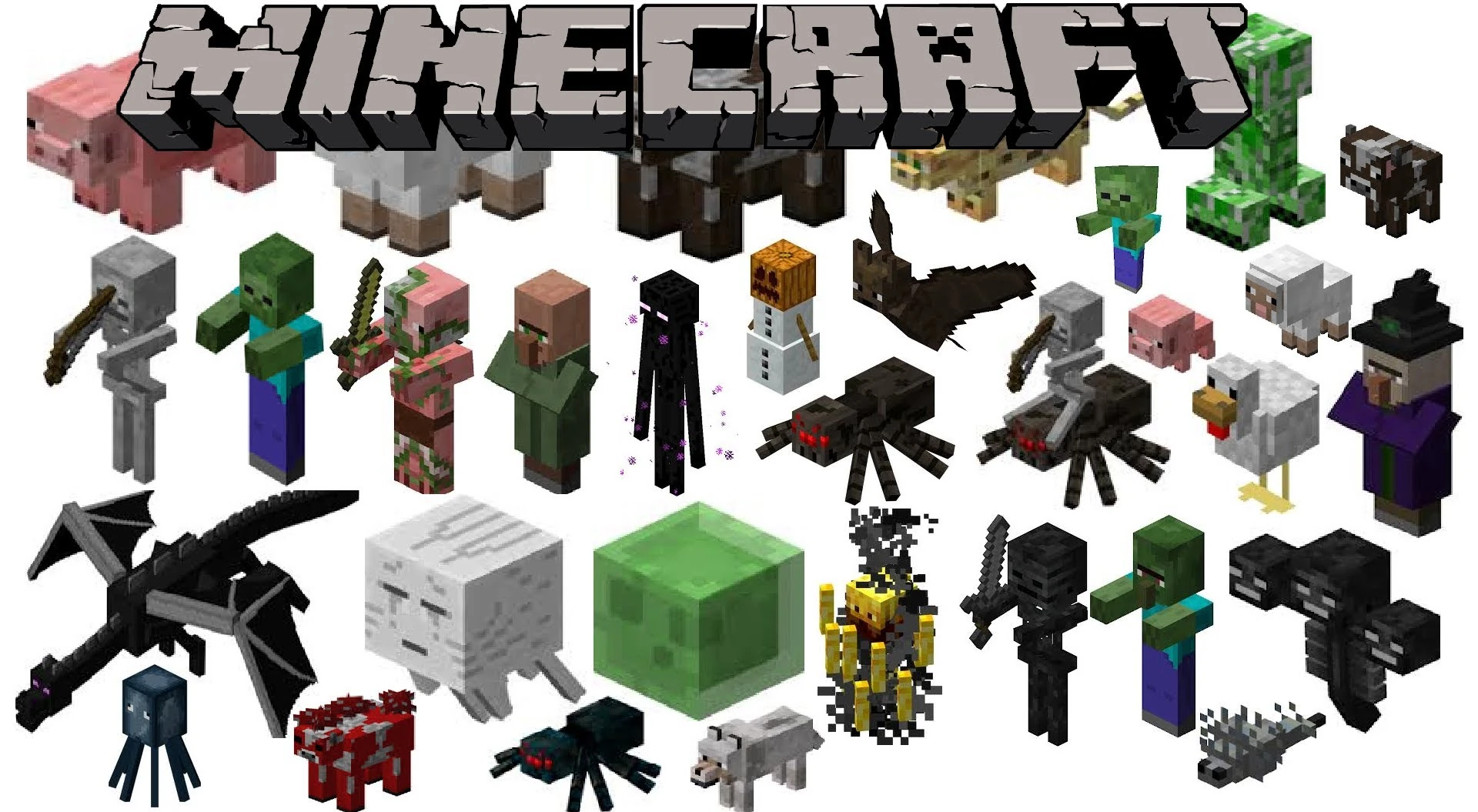
Image result for minecraft mobs
\

“what they do not see and hear are the discussions and commands crucial to the process of making anything” (Yi-Fu Tuan, P.1, 1991) Different regions withhold different creatures, various factions and certain resources, to not know these things would withhold crucial information from a player, rendering the game to be less enjoyable.

Image result for yi tuan
Yi-Fu Tuan portrait - http://paradigmmagazine.com/2014/10/09/paradigm-yi-fu-tuan-interview/

To link Minecraft to the real world it is seen that without and understanding of the symbolism, language or story people are often led into a dead end or have to start all over again to gain an understanding. This is why Minecraft indeed has such a large fan base, because no matter how far we look into the similarities the award winning game mirrors society today


Referencing:

*, A. B. (2014, October 9). Interview with Yi-Fu Tuan. Retrieved August 31, 2016, from paradigmmagazine, http://paradigmmagazine.com/2014/10/09/paradigm-yi-fu-tuan-interview/

Friday, 26 August 2016

Online/Offline: Reflecting and Creating the World

Online/offline are words that are familiar to all of us, living in this digital age. We can watch when others are “online” on Facebook, while some choose to “go offline” and take a break from technological interference. They present our lives as two phases. Online, which I think of as being “switched on”, available and connected to a virtual network. Meanwhile offline conjures up both ‘reality’ and mundanity.

But do dichotomies like these reflect a truth about our lives? Or have they produced it? According to the Sapir-Whorf Hypothesis, “the real world is… unconsciously built upon the language habits of the group” (lecture). Wouldn’t this be even more true with the internet, a world we have created?
Naming ‘online’ and ‘offline’ created as phases what were once many distinct states and actions. Talking, walking, seeing, touching– these are completely different, as are messaging and posting photos. Once collectedly named though, these words have affected the way we think and act. Similarly ‘Asia’ was once not a place, nor were ‘Asians’ a collective. It is a continent with borders strategically placed, with several civilisations that show no unity. But once ‘Asia’ was named, people identified as such. There are now Pan-Asian Conferences and Asian, as well as an entire stereotype of people (Tuan, 1991).

The way we sometimes see online vs. offline
A dichotomy like online/offline means we think one is closer to the “real”.  Among my friends, one of us could “talk” to someone of the opposite gender online nearly every day without these relationships “meaning anything”. People post photographs of themselves on the internet posing as they would never do “offline” – especially not in front of many people. ‘Online’ is also associated with danger and crime, especially to parents warned to always “Check what your child is doing online”. It’s a lot harder to be fearful when their actual action is looking at photos.


I’m not saying there aren’t definite differences between the way we communicate with technology and without, such as mediation by facial expression vs. emojis, as elaborated on by TravelDudes blog in“What’s theDifference?” (AnnJason, 2015) However many of the traits we place on “online” and “offline”, and the difference exist through our own creation.

Bibliography

AnnJason. (2015, August 21). What’s the Difference between Online and Offline Communication? Retrieved from TravelDudes: http://www.traveldudes.org/travel-tips/what-s-difference-between-online-and-offline-communication/65009

Kuttainen, V. (2016). BA1002: Our space: Networks, narratives and the making of place, Week 5. [PowerPoint slides]. Retrieved from http://learnjcu.edu.au


Tuan, Y.-F. (1991). Language and the Making of Place: A Narrative-Descriptive Approach. Annals of the Association of American Geographers, 684-696.

Communicating Space from Opposite Sides of the World


Photography has become an incredible useful medium of human interaction. Sight is one of our most precious senses, and our perception of the world around us hinges on what we can see, especially when it comes to social media and our perception of space. 

When our friends travel overseas and send us photos, after recovering from our initial pangs of jealously, we sit and stare at the pixels on our screens and imagine what being there must be like. We think of the smells, the sounds, the warmth of the sun. All of this begins with sight. In the Tuan reading, he says that "warm conversations with friends can make the place itself feel warm" (Tuan, 1991), which implies that photographs rely on more than just imagery to communicate space. Without the combined aural and visual power, it's absolutely impossible to feel a warm sun, which means the image is a narrative form. 

Instagram is completely reliant on images to create its space. The posted images and the recent addition of Stories, help to form another type of narrative. One that advertises consumption to its users. 

Evolutions in technology have awakened in us a desire to share what we have learned with the world, which has been eased by the emergence of social media websites like Instagram, Snapchat and Tumblr. The millions of captioned photographs that are posted daily from all around the world are presented to others in a way that is easily consumable, to ease communication between followers even further. This adds to the "warmth and aliveness" (Tuan, 1991) of the place, and helps reflect our identity in any way we choose to present it. 


Sources

1: Tuan, Y. (1991) Language and the Making of Place: A Narrative-Descriptive Approach. Annals of the Association of American Geographers, 81(4). 680-700. Retrieved from http://www.jstor.org/stable/2563430 
2: Kuttainen, V. (2016) BA1002. Week 5. (PowerPoint slides). Retrieved from http://learnjcu.jcu.edu.au/webapps/blackboard/content/listContent.jsp?course_id=_76323_1&content_id=_2422311_1

"Yes SIR! Wait, what?" Cadet Languages


The Australian Air Force Cadets (lets call them the AAFC to save time) has a very specific set of words, abbreviations, and general military slang. Some say its because we are the ‘cool kids’ but realistically it is because our ‘parent service’ is the RAAF. The alumni network of ex-cadets on Facebook (as mentioned in previous blog post "When Ex-Cadets Reconnect...")  is an amazing example of how people take this language that ex-cadets from some point know and can relate to the AAFC experience, and they use it to create a place and community online inside an extensive network.

When an ex-cadet asks a question on the Manual of Drill or the MoGT, they might put in that tehy is originally from 1 Wing (101 SQN) and that they are an ex CUO, who did their SNCOs course in 3 Wing instead of 1 wing (see picture above) (Hubbard). This means nothing to someone who isn’t familiar with the AAFC or the military in some way, however to an ex Cadet like me, I feel a connection to them because I am an ex SGT who did my SNCO course in 1 Wing but was a 101 SQN member. I feel a part of their group, of their community, even though I’ve never met the woman. I can answer their question because I know what they is asking. they used this language to communicate with a specific set of people.

The entirety of the network does this because it creates a sense of community and ‘a small world’ within a nation wide network. Tuan says in a passage about approaches to linguistic Place-Construction that “The second approach [to linguistic Place-Construction] is sociolinguistic in emphasis; that is, it focuses on the use and effectiveness of speech in particular social contexts”. (Tuan, 1991) In the particular social context that is the AAFC Alumni, using these terms even if not necessary, creates a place and a community.


Bibliography

Hubbard, J. (n.d.). Cadet's Language. Facebook, Townsville.
Tuan, Y.-F. (1991, December ). Language and the Making of Place: A Narrative-Descriptive Approach . (T. A. Geographers, Ed.) Annals of the Association of American Geographers, , Vol. 81 ( No. 4), 685.