Thursday, 1 September 2016

Duplicity or Posthuman?


When comparing the P&C, real network to Facebook, the virtual network, I agree with McNiell’s (2010, p72) narrative of the Facebook Profile as humanist with a shift towards posthuman foundations when the Timeline was introduced.  Leaving the ‘self’ open to influence of the Web and losing the ‘I’ to become part of the ‘we’ operating together to make a ‘self’ much like the operation of the P&C.  The P&C is a “posthuman collectivity” working together as one to assist our school.

David Atkinson and Paul Silverman argue the “authenticity of life is not to be understood simply” (Atkinson & Silverman (1997, 319) as cited by Kuttainen, 2016, slide 5).  An individual’s life is made up of many parts pieced together to make the personality.  Those pieces metamorphose throughout their life with age, experience and knowledge and are tempered by audience, location and what is socially acceptable.  The P&C self represents the authentic self.  However, the individual has to play a role and act as an advocate on behalf of the school and students.  This idea aligns itself with Bolter’s idea that “networked self is organised like the Web itself, as a constantly changing set of affiliations or links.  At any given moment the individual is defined by the connections that she chooses to establish with other individuals, activity groups, and religious and secular organisations” (Bolter, (2000, 17-29) as cited by McNiell, 2012, p. 72).  Friendships which exist outside the P&C sphere are tested within the P&C network. 

I have experienced such a shift when voting differently to a “friend” in a committee vote. The “friend” left the meeting, even though that person knew my stance on the matter.  That person and I are friendly in social/community settings, but no longer enjoy a friendship.  This “friend” is also the “Flaneur” described in my previous blog (Hough, 2016).  This example of the authentic self is evidence of the complexity of Atkinson and Silverman’s theory (Atkinson & Silverman (1997, 319) as cited by Kuttainen, 2016, slide 5).   Some people have the ability to separate ‘business’ from ‘friendship’ and others cannot due to immaturity, life experiences or simply the inability to understand the difference.


References

Hough, T. (2016). Give a ruler an inch and they’ll take a mile. Retrieved from http://ournewblog2016.blogspot.com.au/2016/08/give-ruler-inch-and-theyll-take-mile.html

Kuttainen, V. (2016). BA1002: Our Space:  Networks, Narratives and the making of place, Lecture 6:  Network narratives.  [PowerPoint slides].  Retrieved from https://learnjcu.jcu.edu.au

McNeill, L. (2012). There is no "I" in network: Social networking sites and posthuman auto/biography. Biography, 35(1), 65-82. Retrieved from https://learnjcu.jcu.edu.au

Image:  https://socialecologies.files.wordpress.com/2016/03/spiritual-being.jpg?w=156&h=199&crop=1

The Real?


The university college is a real network, in which the young adults residing there may often find it difficult to be their authentic selves. In this network there are many factors at play, which all combine to create a self. Katherine Hayles’ said moving the “technologies of inscription” from the real of the real world to the electronic “fundamentally alter[s] the relation of signified to signifier”(1999).

Aside from the real social network of the on campus college, there are private groups on Facebook which are created for the numerous hubs which make up the larger network. For example – each building on the college has a group, so does each individual floor and then the biggest group in which all the college residents are a part of.

In the real life network that has now become virtual- concepts such as self-awareness come into play; members of the groups can post announcements, queries and even memes. Though the main aim of these posts is to be informative- the way in which each individual responds to a post is somewhat similar to their real-life persona. In other words, most of the members’ responses in this groups are authentic to their real life selves.  Sheryl Sandberg the COO of Facebook, supported this notion of authenticity when she said “You can’t be on Facebook without being your authentic self” (Kirkpatrick, 2010).

However in the readings this week, McNeill questioned if a person does know their authentic self and who determines authenticity on Facebook (2012). The college Facebook groups have intertwined reality with virtual reality together, with the members communicating through the virtual network and altering their real life personas to suit their online wants. This claim can be supported by McNeill's statement “The digital era complicates definitions of the self and its boundaries, both dismantling and sustaining the humanist subject in practices of personal narrative” (McNeill, 2012).


References:
Hayles, N.K (1999). How we became posthuman. Chicago, IL: University of Chicago Press.
Kirkpatrick, D. (2010).The Facebook effect. New York, NY: Simon Schuster.
McNeill, L. (2012). There is no “I” in network: Social networking sites and posthuman auto/biography. Biography, 35 (1), 63-82. doi: 10.1353/bio.2012.009

Stanford eCorner. (2011, May 24). Sheryl Sandberg: The importance of authentic communication. [Video file]. Retrieved from https://www.youtube.com/watch?v=3nRENaRCvLI

The Public Narrative

Narratives are simply stories of events that come in a variety of forms which become interrelated and networked with one another. Kuttainen (2016) explains, “All narratives are networked in that they are intertextual: they reference, in their form and content, narratives that have gone before them”. 

The original network narrative was “the Public Sphere”. This phrase was coined by German sociologist Jürgen Habermas, after the 18th Century which described places of discussion. It signified a transformation in society as democracy was emerging. Coffee houses and salons became the places for discussion, the hubs in the network for idea exchange, important to democracy.

Society was further transformed when the rise of mass media led to the breakdown of the public sphere. The purpose of the public sphere
The Social Media Sphere
was altered to suit mass media; true participatory democracy became non-existent.

Social Media has become the new networked narrative. Facebook provides a platform for users to create and contribute to narratives about themselves and others in their network. Networked Narratives can be created through “Groups”, which allows users to form communities to conduct collaborative discussions. It’s like a virtual public sphere, instead of meeting at a coffee house, you are meeting online.

However, there is control over our narratives, leading to the breakdown of the public sphere. Facebook uses an algorithm to tailor users networked narratives, but as McNeill (2012, pg. 76) expresses, “their [Facebook] processes have profound implications for how users see and understand themselves and their networks.” Eli Pariser explains this concept of filter bubbles in his TED Talk, where a user’s News Feed is filtered to ensure only their interests appear limiting the shaping of their identity. NcNeil (2012, pg. 76) quotes Zuckerburg explaining the value of the news feed: “A squirrel dying in front of your house may be more relevant to your interests right now than people dying in Africa”. This shows how much power Facebook has over its user’s News Feed which influences the user’s networked narrative.

References
Kuttainen, V. (2016). BA1002: Our space: Networks, narratives and the making of place, lecture 6: networked narratives. [PowerPoint slides]. Retrieved from http://learnjcu.edu.au

McNeill, L. (2012). There Is No "I" in Network: Social Networking Sites and Posthuman Auto/Biography.Biography 35(1), 65-82. University of Hawai'i Press. Retrieved September 1, 2016, from Project MUSE database.

Peltier-Davis, A C. (2015). The incredible jun: a town that runs on social media [Image]. Retrieved from http://cybrariansweb.com/2015/04/20/the-incredible-jun-a-town-that-runs-on-social-media/


The Shadow Biographer

Following our topic of Narratives last week, we continue to look at how the virtual networks affect our self-narratives. We concluded last week with looking at how people are aware that they are being watched on twitter. However, this week’s reading and lecture highlights how not only our post affects our virtual self-narrative but everyone in our network and even those far who are connected to us from another degree.
Figure 1

As Kuttainen (2016) restated in this week’s lecture, “networks are two or more hubs linked by some kind of relationship with each other. Embedded in networks are notions of communication, exchange, community and self, reality and virtuality.”

Twitter’s mission is “to give everyone the power to create and share ideas and information instantly, without barriers.” Which demonstrates how almost everyone is connected. Despite not following each other, hashtags and common followers can connect everyone together.  This in turn, allows everyone’s tweets to affect each other, altering everyone’s virtual self-narrative.

Virtual networks such as Twitter are popular as they address the “demands for social connection and self-performance” allowing the user to use it in everyday life (McNeill, 2012, p. 66). This ends up allowing the site to become shadow biographer, having the power to add to our virtual self. Twitter shows this through how in 2014, they had started showing tweets of people you don’t follow in your timeline (Meyer, 2016).

The overall concepts of authenticity and self are fabricated differently to reality. Similar to Facebook, Twitter uses data mining questions and prompts to ensure that users keep posting as the website would not function without its users. As a result, this ensures that we keep some sort of our authentic virtual self as we still have some freedom.

The virtual-network of Twitter, allows everyone to connect to each other despite different reasons for using the site. Everyone has different powers on the site but everyone can also affect anyone else’s self-image.


References

Company | About. (2016). About.twitter.com. Retrieved 1 September 2016, from https://about.twitter.com/company

Figure 1: How to Build a Twitter Network that Will Help You Win at Work. (2016).Fortune.com. Retrieved 1 September 2016, from http://fortune.com/2016/08/16/diverse-twitter-network-career-tips/

Kuttainen, V. (2016). BA1002. Week 6. [PowerPoint Slides]. Retrieved from https://learnjcu.jcu.edu.au/webapps/blackboard/content/listContent.jsp?course_id=_76323_1&content_id=_2298427_1

McNeill, L. (2012). There is No "I" in Network: Social Networking Sites and Posthuman Auto/Biography. Biography, 35(1), 65-82.

Meyer, R. (2016). Twitter Starts to Change the Central Logic of Its Service. The Atlantic. Retrieved 1 September 2016, from http://www.theatlantic.com/technology/archive/2014/08/twitter-starts-to-change-the-central-logic-of-its-service/378650/


Your "Self" is not Alone

Facebook is a virtual platform that reconceptualises our authentic self. In a social network, the concept of “I” is suddenly replaced with “we”, operating together to re-create a self.

Facebook promotes a true reflection of self through its foundation of authenticity. McNeill states that “[there is] credential of the proper name… users must sign up using their real names, verified by birth date and email address” (2012, p. 68). This element of the Facebook framework regulates adherence to our true self, allying both real and virtual identities.

This notion of authenticity is foregrounded in a statement made by Facebook CEO Sheryl Sandberg, proclaiming “you can’t be on Facebook without being your authentic self” (Kirkpatrick, 2010). However, McNeill states that “such regularising of identity… [can] design the self in ways that [can] be easily [accessed] for data mining” (2012, p. 70). The layout of the Profile categorises particular information which Facebook can then correlate to produce an online self (Kuttainen, 2016). This virtual selfhood thus becomes based on friend suggestions or identified relationships, affecting the authenticity of self.  

The ability for users to be more selective in the virtual world means that the status of a user’s “friends” can affect true self-presentation. McNeill states that “[the] networked self emphasises the collective nature of subjectivity” (2012, p. 73), as the absentness of something to determine authenticity reconceptualises identity to virtual self-inscriptions (McNeill, 2010, p. 68). This challenges the “nonymous” (McNeill, 2012, p. 68) environment of Facebook as our selfhood is no longer an individual reflection, rather a series of networked connections.

The overall concepts of authenticity and self are constructed in a way that is different to reality. Facebook’s use of data mining questions the determination of authenticity in the network, due to the construction of self favouring the concept of “we” over “I”. As a result, Facebook can only elicit some elements of our authentic self, due its social atmosphere.

Reference List

Kirkpatrick, D. (2010). The Facebook Effect. New York: Simon and Schuster.

Kuttainen, V. (2016). BA1002. Week 6. [PowerPoint Slides]. Retrieved from https://learnjcu.jcu.edu.au/webapps/blackboard/content/listContent.jsp?course_id=_76323_1&content_id=_2298427_1

Stanford eCorner. (2011). Sheryl Sandberg: The Importance of Authentic Communication. [Video  file]. Retrieved from https://www.youtube.com/watch?v=3nRENaRCvLI

McNeill, L. (2012). There is No "I" in Network: Social Networking Sites and Posthuman Auto/Biography. Biography, 35(1), 65-82.

Wednesday, 31 August 2016

The World Of Memes

The World Of Memes
Memes are everywhere; they fill social networking sites with their humour and satire, and often people don’t need to know the context to be amused by them. Memes are quite a common feature on social networks, designed to bring people together for a mutual likeness and for a good laugh.

“Networks are two or more hubs linked by some kind of relationship with each other. Embedded in networks are notions of communication, exchange, community and self, reality and virtuality” (BA1001. 2016). Memes create a network within social media, a virtual network. Memes join everyone together at one point in time, through comments, likes, shares or posts. Everyone who sees it is joined to the others who have seen it. It creates a world wide network joining people who never knew another existed and allowing them to be aware of the world around them.

Self awareness comes into play with this world wide virtual social network; you can create your own posts, your own memes, and your own self. On social network you can be whomever you wish, and nobody can know or do anything about it. Its is a safe haven for those who have low self esteem and wish to be someone they are not; and thus hide behind the computer screen. It intertwines reality and virtual reality together, with the people communicating through the virtual network and altering their real self online to suit their wants.

“The digital era complicates definitions of the self and its boundaries, both dismantling and sustaining the humanist subject in practices of personal narrative, moving the “technologies of inscription” from the realm of the material world to the electronic “fundamentally alter[s] the relation of signified to signifier” (McNeill. 2012).


References:

BA1002. (2016, 08 19). Our Space: Networks, Narratives, and the Making of Place. Townsville, QLD, Australia. http://www.jcu.edu.au
McNeill, L. (2012). There is no “I” in network: social networking sites and posthuman auto/biography. Retrieved Biographical Research Centre.


Minecraft: a sense of direction


Symbolism to a story, names to symbolise and a story with important names; it is as if one cannot live without the other, a triangular paradox with each factor relying on the other; the three most important factors needed for self identity, or just identity in general. Symbolism helps us define things and place stimuli into categories in the real world, names help us give a recognisable title to these things and story helps us understand why and how these things have come about. However, how do we incorporate real life values, such as these three just mentioned, into a basic sandbox based virtual reality?

Image result for minecraft blocks


To even survive your first night in the unforgiving darkness of Minecraft you need a sense of symbolism, and understanding of your surroundings. Once an understanding is made, a definition of what is dangerous Vs what is safe is made the next challenge players find themselves facing is sense of direction. “A principal reason for the neglect of speech is that geographers and landscape historians tend to see place almost exclusively as the result of material transformation of nature” (Yi-Fu Tuan, P.1, 1991) Drawing on Tuan’s view of stereotypical geographers, to see the world of Minecraft as a simple map of different materials would be a mistake; to know what biomes surrounded a player would indeed be helpful, however to be as simple minded as Tuan states geographers are would lead players to a certain death. 


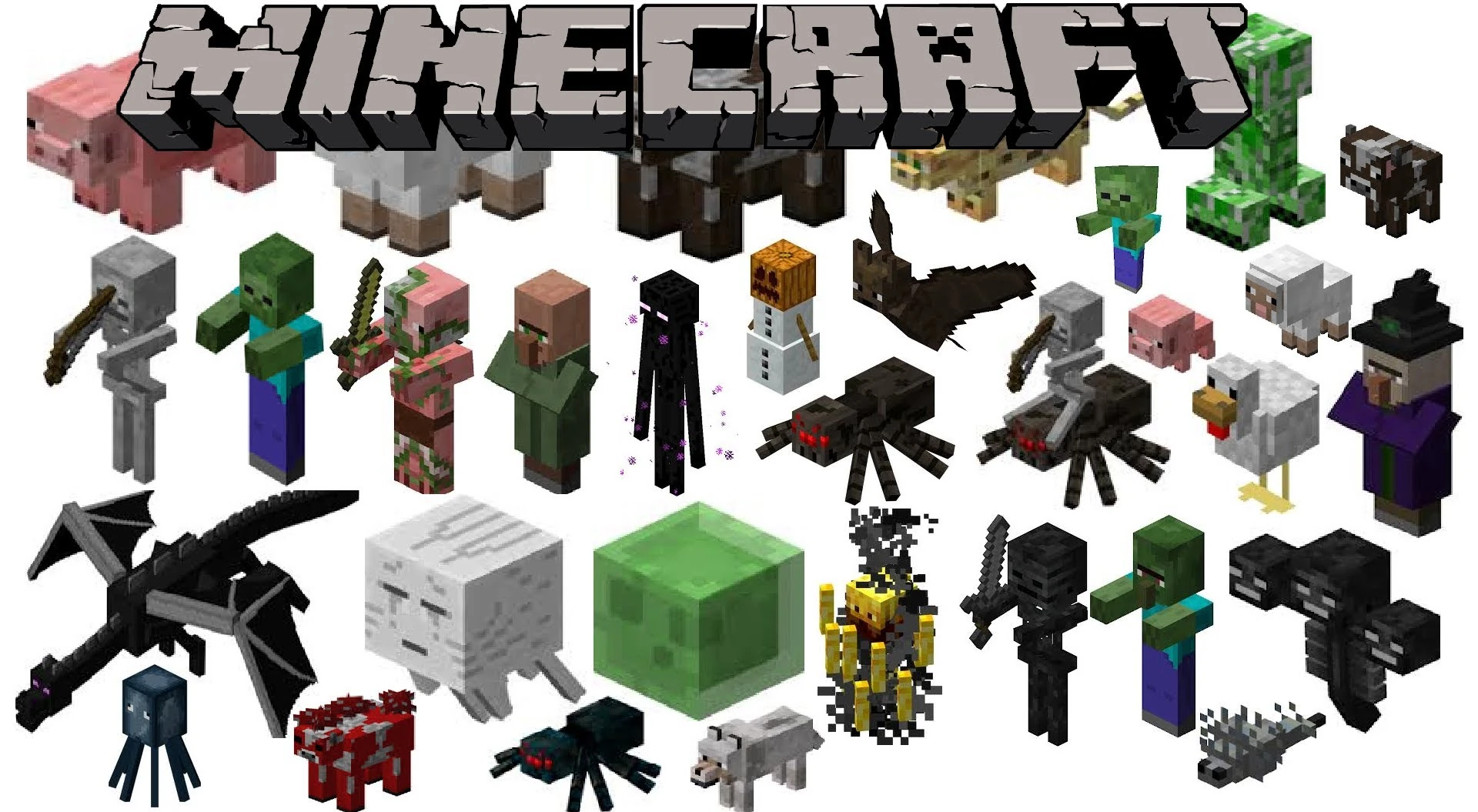
Image result for minecraft mobs
\

“what they do not see and hear are the discussions and commands crucial to the process of making anything” (Yi-Fu Tuan, P.1, 1991) Different regions withhold different creatures, various factions and certain resources, to not know these things would withhold crucial information from a player, rendering the game to be less enjoyable.

Image result for yi tuan
Yi-Fu Tuan portrait - http://paradigmmagazine.com/2014/10/09/paradigm-yi-fu-tuan-interview/

To link Minecraft to the real world it is seen that without and understanding of the symbolism, language or story people are often led into a dead end or have to start all over again to gain an understanding. This is why Minecraft indeed has such a large fan base, because no matter how far we look into the similarities the award winning game mirrors society today


Referencing:

*, A. B. (2014, October 9). Interview with Yi-Fu Tuan. Retrieved August 31, 2016, from paradigmmagazine, http://paradigmmagazine.com/2014/10/09/paradigm-yi-fu-tuan-interview/